
We’ve all been there.
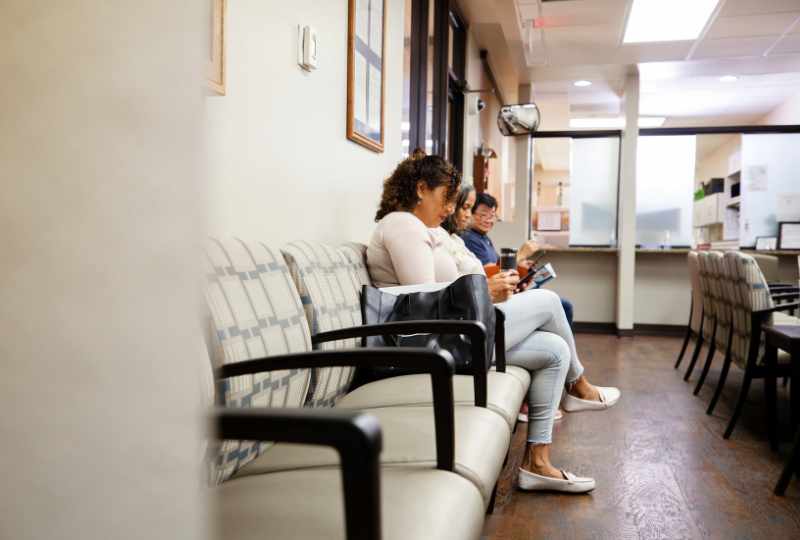
You’re sitting in a waiting room.
Someone cheerfully tells you, “We’ll be with you shortly.”
Five minutes pass.
Then ten.
Then twenty.
No one checks in.
No one explains the delay.
No one even makes eye contact.
At that point, it isn’t really about the wait anymore.
It’s about how the wait makes you feel.
Did they forget about me?
Do they know I’m still here?
Does anyone care?
Here’s the interesting part: research shows that people are often more understanding about delays than we think as long as they’re kept informed along the way.
That’s an important reminder for all of us because waiting isn’t just part of healthcare. It’s part of customer service in every industry.
Whether your customers are waiting for an appointment, a return phone call, a repair, a meal, or an email response, the experience they have during that wait shapes how they feel about your organization.
What the Research Tells Us
The Beryl Institute recently released a fascinating white paper exploring the experience of waiting in healthcare.
One statistic immediately caught my attention.
Sixty-seven percent of healthcare leaders identified training staff to acknowledge delays and proactively communicate with patients as one of the most effective ways to improve the waiting experience.
Think about that for a moment.
Not reducing wait times.
Not adding more technology.
Not building larger waiting rooms.
Simply communicating.
Because when people understand what’s happening, uncertainty decreases.
And when uncertainty decreases, frustration often follows.
The research also found that small human interactions checking in with patients, providing updates, and simply acknowledging the wait can dramatically improve how people experience delays.
Sometimes people don’t need an immediate solution.
They simply need reassurance that they haven’t been forgotten.
A Real-World Story
Not long ago, I visited a healthcare office for a routine appointment.
The receptionist was friendly, and everything started off well.
After checking in, I took a seat in the waiting area.
As the minutes passed, I noticed something interesting.
No one came out to provide an update.
No one explained that the schedule was running behind.
No one acknowledged the growing number of patients quietly wondering when they would be called.
Eventually, someone appeared and apologized for the delay.
And honestly?
That simple apology changed everything.
The wait hadn’t become shorter.
But suddenly I understood what was happening.
I felt acknowledged.
I felt seen.
That small moment reminded me that communication doesn’t eliminate every inconvenience but it often changes how people experience it.
Three Strategies That Turn It Around
1. Acknowledge the Wait
Silence creates uncertainty.
Whether the delay is five minutes or fifty, let people know you haven’t forgotten them.
A simple update such as,
“We’re running about 15 minutes behind today. Thank you for your patience.”
can dramatically reduce frustration.
Customers don’t expect perfection.
They appreciate honesty.
2. Set Expectations Early
One of the easiest ways to improve the customer experience is to explain what people can expect before they have to wonder.
Tell them:
- what happens next
- approximately how long it may take
- if delays are possible
- who they’ll hear from
Clear expectations create confidence.
Uncertainty creates anxiety.
3. Never Underestimate Human Connection
Technology can make processes faster.
People make experiences better.
A smile.
Eye contact.
A sincere apology.
A quick check-in.
These moments may seem small to you.
They rarely feel small to the person who’s waiting.
As the Beryl Institute reminds us, people still need communication, compassion, and connection while they wait.
Remember
People may not remember exactly how long they waited.
But they will remember how you made them feel while they were waiting.
Did they feel ignored?
Or informed?
Forgotten?
Or valued?
The experience you create during the wait often becomes the experience they remember most.
Turning Insight Into Action
Improving the patient experience isn’t about eliminating every delay.
Some waits are unavoidable.
What is avoidable is leaving people feeling uncertain, disconnected, or forgotten.
That’s one of the reasons I’m so excited to partner with Protoqual to launch The Art of PX.
This 12-week learning experience was designed to help healthcare leaders strengthen communication, build trust, improve consistency, and create patient experiences that people remember for all the right reasons.
If you’d like to learn more, visit:
https://protoqual.com/the-art-of-px
I hope you’ll take a look.
I believe it’s a valuable resource for organizations that are committed to creating exceptional patient experiences.
Every organization has opportunities to improve the customer or patient experience.
Sometimes those opportunities are found in the waiting room.
Sometimes they’re found in our communication.
And sometimes they’re found in the small moments that customers remember long after the interaction is over.
If you’d like to explore practical ways to strengthen the experience you provide, I’d be happy to schedule a complimentary 30-minute Zoom consultation.
Together, we can identify simple changes that create meaningful results for your customers, your patients, and your team.